
Development Action Plan for Scheduled Tribes (DAPST)
The Development Action Plan for Scheduled Tribes (DAPST) focuses on the socio-economic upliftment of Scheduled Tribe communities across India. The scheme aims to ensure targeted allocation of resources for education, livelihood, healthcare, skill development, and infrastructure development in tribal-dominated areas. Through this initiative, the government seeks to reduce regional disparities and promote inclusive growth by addressing long-standing developmental gaps faced by tribal populations.
Nasha Mukt Bharat Abhiyan (NMBA)
The Nasha Mukt Bharat Abhiyan is a flagship national initiative aimed at eliminating substance abuse, particularly among youth and vulnerable populations. The program emphasizes awareness generation, community participation, preventive education, treatment, rehabilitation, and reintegration of individuals affected by substance misuse. It encourages a community-driven approach involving families, institutions, and civil society to create a drug-free and healthier society.
NAMASTE Scheme
The National Action for Mechanized Sanitation Ecosystem (NAMASTE) scheme is designed to eliminate manual scavenging and promote the dignity, safety, and livelihood security of sanitation workers. The scheme supports mechanization of sewer and septic tank cleaning, skill training, occupational safety, and access to alternative livelihoods. NAMASTE reflects the constitutional commitment to human dignity and social justice for sanitation workers and their families.
National Overseas Scholarship (NOS) Scheme
The National Overseas Scholarship (NOS) Scheme provides financial assistance to students belonging to Scheduled Castes, Denotified Nomadic and Semi-Nomadic Tribes, Landless Agricultural Labourers, and Traditional Artisans to pursue higher education abroad. The scheme aims to enhance educational opportunities, global exposure, and professional advancement for students from socially and economically disadvantaged backgrounds.
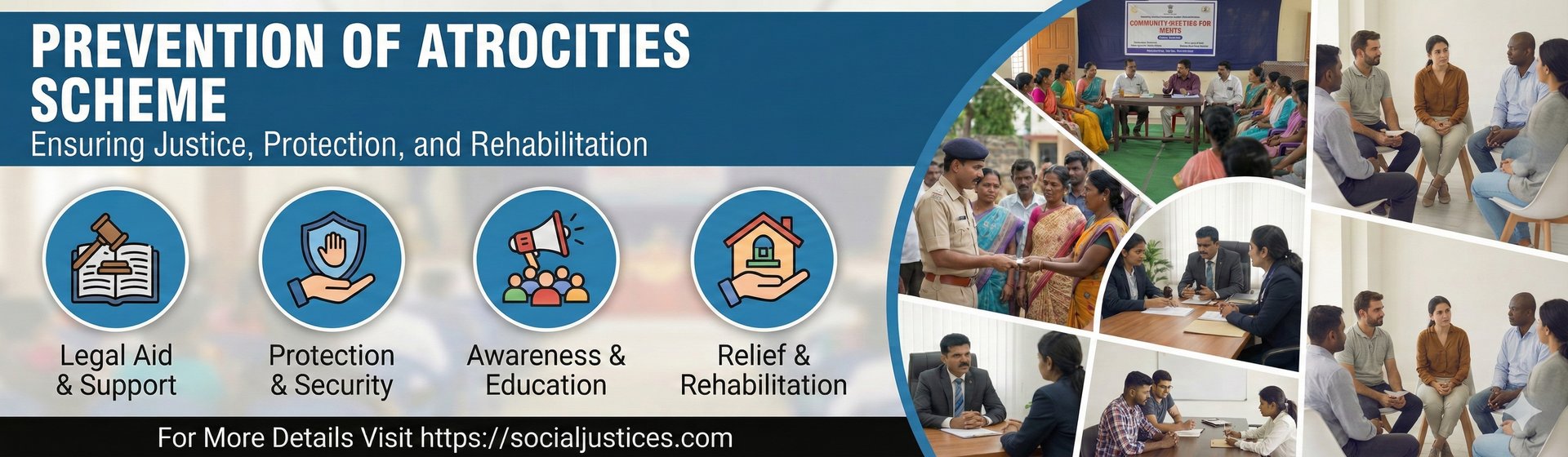
Prevention of Atrocities Scheme
The Prevention of Atrocities Scheme is implemented to safeguard Scheduled Castes and Scheduled Tribes from discrimination, violence, and exploitation. It focuses on legal protection, relief, rehabilitation, and speedy justice for victims of atrocities. The scheme strengthens enforcement of the SC/ST (Prevention of Atrocities) Act by ensuring awareness, accountability, and access to justice at the grassroots level.
Pradhan Mantri Dakshta Aur Kushalta Sampann Hitgrahi (PM-DAKSH) Yojana
The PM-DAKSH Yojana aims to enhance the skill development, employability, and entrepreneurial capacity of marginalized groups, including Scheduled Castes, Other Backward Classes, Denotified Tribes, and Safai Karamcharis. The scheme provides short-term and long-term training programs, skill certification, and support for self-employment, enabling beneficiaries to achieve sustainable livelihoods.
Post Matric Scholarship for Scheduled Tribe Students
The Post Matric Scholarship for Scheduled Tribe Students supports ST students pursuing education beyond the secondary level. The scheme covers tuition fees, maintenance allowances, and other academic expenses to reduce dropout rates and promote higher education among tribal youth. It plays a crucial role in empowering students through education and improving long-term socio-economic outcomes.
PM-AJAY (Pradhan Mantri Anusuchit Jaati Abhyuday Yojana)
PM-AJAY focuses on the integrated development of Scheduled Castes through infrastructure development, income generation, skill development, and social empowerment. The scheme aims to reduce poverty, improve living standards, and enhance access to basic services in SC-dominated areas, ensuring holistic and sustainable development.
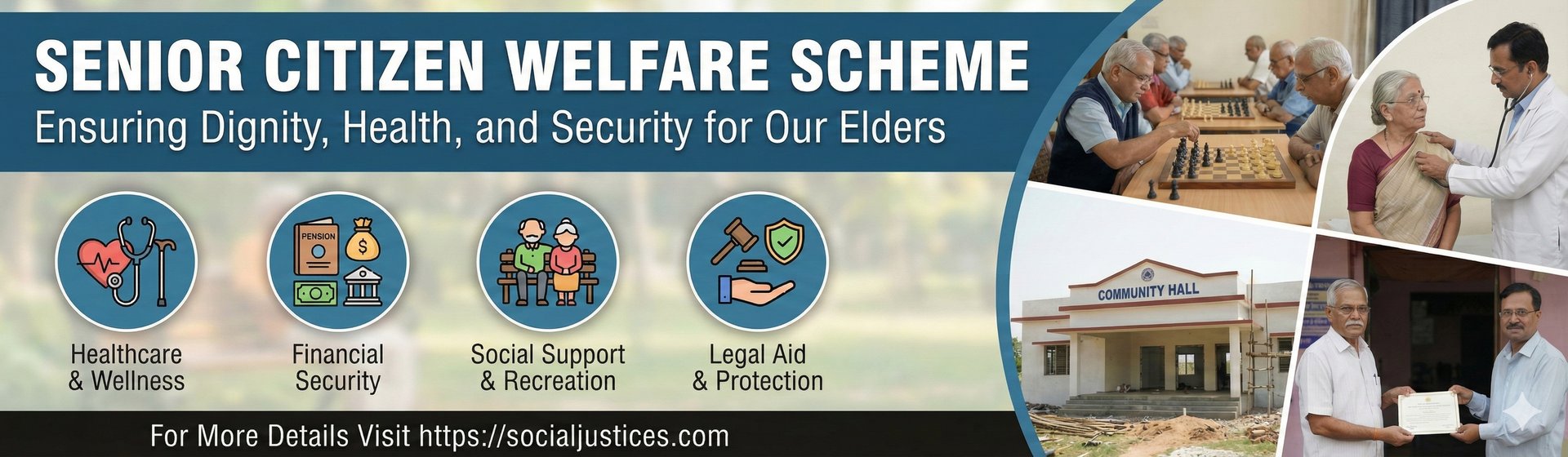
Senior Citizen Welfare Scheme
The Senior Citizen Welfare Scheme is designed to promote the health, safety, financial security, and social well-being of elderly citizens. It supports initiatives related to healthcare, pensions, legal aid, old-age homes, and social inclusion, ensuring that senior citizens can live with dignity, independence, and security.
Transgender Welfare Scheme
The Transgender Welfare Scheme focuses on the social, economic, and educational empowerment of transgender persons. It provides support in areas such as healthcare, housing, education, skill development, and identity recognition. The scheme aims to eliminate discrimination, promote inclusion, and ensure equal opportunities for transgender communities.
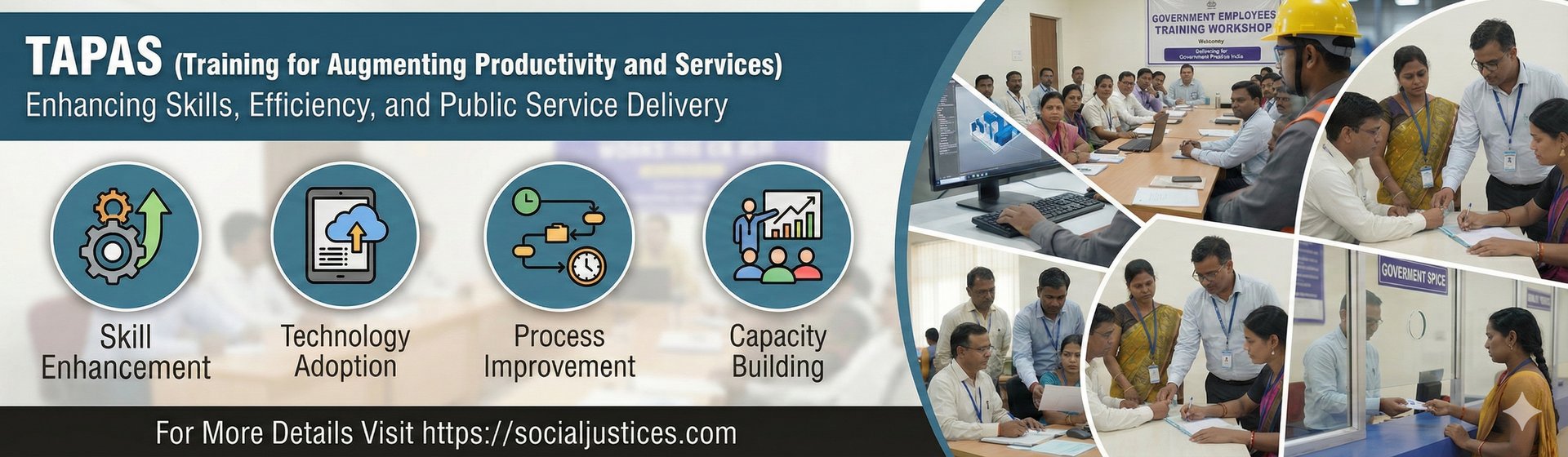
TAPAS (Training for Augmenting Productivity and Services)
TAPAS is a capacity-building and skill enhancement initiative aimed at improving productivity, service delivery, and employability among targeted beneficiary groups. The scheme emphasizes structured training, knowledge enhancement, and professional development to strengthen individual capabilities and institutional effectiveness.
The Social Justice Implementation Council (SJIC) is a professionally governed, autonomous organization registered under the Ministry of Corporate Affairs (MCA) and functioning as an autonomous body aligned with the mandates of the Ministry of Social Justice & Empowerment, Government of India.
Established to bridge the critical gap between legislative intent and ground-level reality, SJIC serves as a specialized execution arm for social welfare. We function as a bridge between the Government and the citizens, ensuring that the benefits of India’s robust social justice framework reach the "last mile"—the most vulnerable and marginalized sections of society
About SJIC

Quick Links
HELPLINE NUMBER
+91-9910810781
+91-9625813814
GET IN TOUCH
+918447812747
14566 - National Helpline Against Atrocities (NHAA)
112 -Women helpline number
1098 -Helpline for children in distress
14567 -National helpline for senior citizens